SFU Engineering Students Earn National Recognition for Innovative Paper Mill Waste Management Project
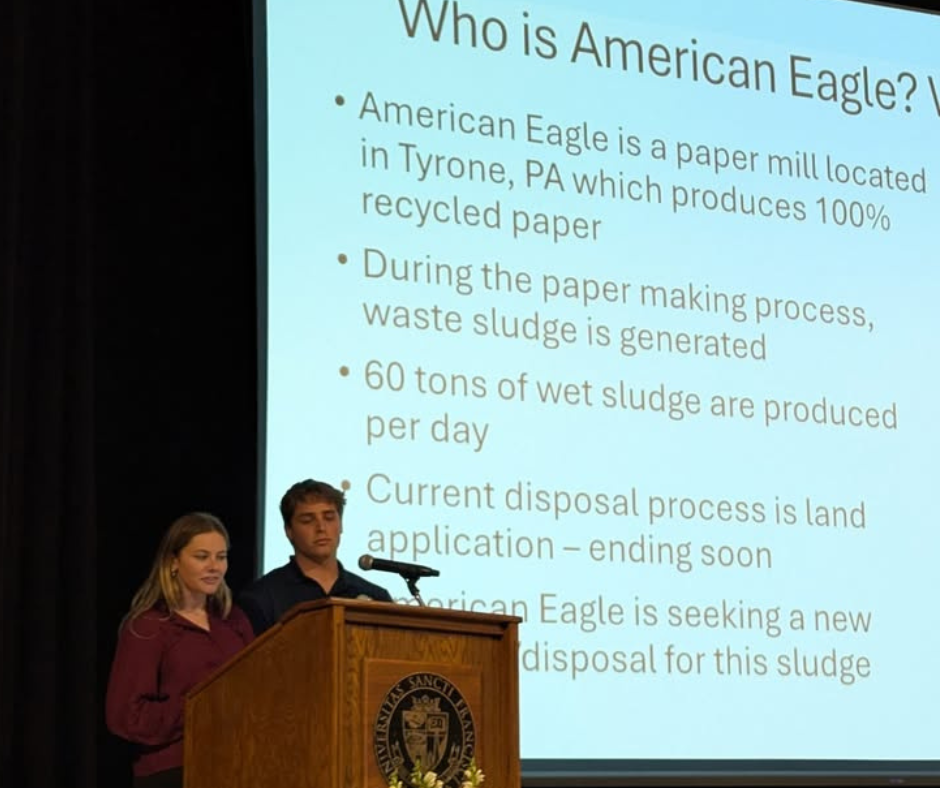
Two Saint Francis University environmental engineering students are earning national recognition for developing a sustainable solution to a real-world waste management challenge at a local paper mill.
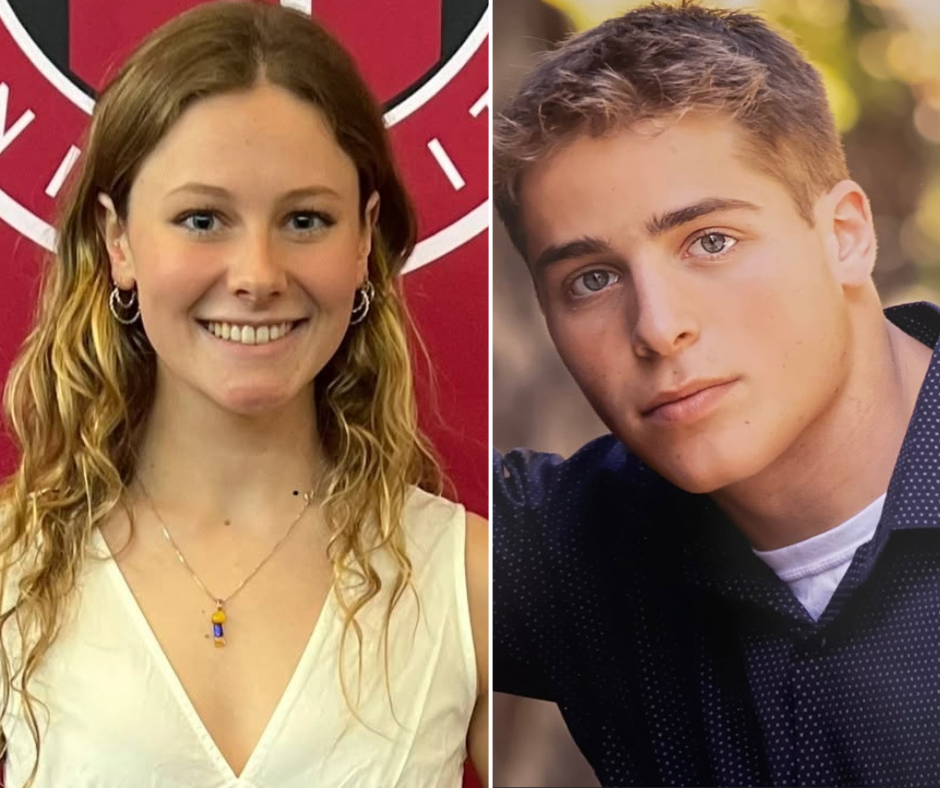
Sarah Hartwell and John Shuster, who graduated from SFU’s Environmental Engineering program in May 2026, were one of eight teams recognized through the 2026 NCEES Engineering Education Awards. The National Council of Examiners for Engineering and Surveying (NCEES) presents the awards to recognize student engineering projects that demonstrate collaboration, professional practice, and innovative design.
For their project, Hartwell and Shuster partnered with American Eagle Paper Mill in Tyrone, Pennsylvania, to explore alternatives for managing a waste by-product generated during the paper-making process.
Tackling a Real-World Environmental Challenge
American Eagle Paper Mill produces 100% recycled paper. As part of that process, the mill generates a waste sludge that has historically been used as a soil amendment for reclaimed mine areas. As that application was coming to an end, the company needed to identify alternative ways to manage the material while maintaining its commitment to environmental sustainability.
Working with Keri Gleason, the company’s Environmental and Sustainability Manager, Hartwell and Shuster investigated several potential solutions.
The students initially proposed three alternatives:
- Composting the sludge material
- Using the material as a daily landfill cover
- Combusting the material for use in a landfill application
After conducting a preliminary analysis of each option, the students determined that combustion offered the strongest potential and moved that option forward for further design analysis. They ultimately developed a final design and presented combustion as their recommended approach to American Eagle.
Learning Alongside Professional Engineers
The project provided students with more than an opportunity to solve an environmental engineering problem. It also introduced them to the professional responsibilities and collaborative process that are an important part of an engineering career.
Hartwell and Shuster worked with Dr. Rachel Wagner, professor of environmental engineering at Saint Francis University and a licensed professional engineer, who served as the project's primary advisor and oversaw design considerations and project development.
They also received guidance from professionals with backgrounds in resource management, environmental health and safety, hazardous waste management, and combustion methods. Their primary client contact, Gleason, is an Engineer in Training (E.I.T.) with a background in mechanical engineering.
This collaboration gave the students an opportunity to experience how engineers work with clients, technical experts, and other professionals to develop solutions to complex problems.
Putting Engineering Skills Into Practice
Throughout the project, Hartwell and Shuster developed technical, communication, and project management skills as they worked through the engineering design process.
They modified ASTM procedures to meet the needs of their project, conducted and interpreted laboratory testing, and applied their findings to develop their proposed solution. They also learned how to communicate technical information to both technical and non-technical audiences.
The project required students to manage their time and resources, delegate responsibilities, and coordinate the various stages of the design process.
Most importantly, they gained experience independently exploring engineering solutions while working with a real client and addressing an actual environmental challenge.
A Sustainable Approach to Engineering
Environmental protection and material reuse were central considerations throughout the project. By exploring alternatives to traditional waste disposal and landfilling, the students sought to develop a solution that aligned with American Eagle Paper Mill’s commitment to environmental sustainability.
The project demonstrates how hands-on engineering experiences can connect classroom learning with the needs of industry and the community.
National Recognition for Student Innovation
Hartwell and Shuster documented their work through a written report and project poster submitted to the NCEES Foundation. Their project was ultimately selected as one of eight winners of the 2026 NCEES Engineering Education Awards.
The recognition highlights not only the quality of their final design, but also the value of the professional experience they gained along the way.
Through projects like this, Saint Francis University engineering students can work with industry partners, collaborate with professional engineers, and apply their technical knowledge to challenges beyond the classroom.
For Hartwell and Shuster, that experience led to a project with real-world impact—and national recognition for their work.