This non-residential program offers rising sophomores, juniors, seniors, and incoming SFU freshmen the chance to take part in hands-on research alongside faculty mentors. Project examples from previous years include studying the wellness benefits of therapeutic gardening, designing hydro turbines for renewable energy, synthesizing nanoparticles using environmentally friendly methods, creating biodegradable fishing lures, studying the effects of training on shelter cats, writing and revising poetry, or investigating potential cancer treatments. Faculty mentors determine the meeting times and schedules, and projects may continue into the fall semester. Participants are responsible for their own transportation to and from campus. The experience culminates with a presentation of results at the annual Student Research Day in November. There is a $100 fee for participation, and applicants must submit transcripts and a brief statement of interest.
Check back soon for updates and registration information and get ready to take the first step toward your future!
Discover the right program for you!
From medicine to the arts, technology to the environment, our Summer Research Programs offer something for every curious mind. You could investigate the hidden impact of concussions, step into the fast-paced world of pre-med, unleash your creativity through writing, explore the wonders of animal ecology, or even dive into the cutting edge of computer science and cybersecurity. Choose the program that excites you most and get ready to make it your own!
If your first choice doesn’t run, we’ll work with you to find another amazing research program that fits your interests.
Pre-College Program Offerings 2027 TBA
2027 research programs are to be announced. See examples of past offerings below.
Nanoscience Exploration
Ashley Smith-Diemler, Ph.D. Associate Professor of Chemistry
More Information
Have you ever wondered: What is a nanoparticle? How do you make one? Can I see something so small? We will address these questions and more in the Nanoscience Exploration Pre-College Research Academy. In this project, you will gain hands on experience working in a Chemistry lab, creating and analyzing gold nanoparticles. We will synthesize these nanoparticles using Green Chemistry methods and characterize the resulting nanoparticles in terms of size, shape, and surface chemistry. Additionally, you will gain experience reading articles about cutting-edge nanotechnology applications, including nanomedicine and water filtration.
We will begin by developing the skills we need to work in a scientific laboratory using Green Chemistry methods. You will have an opportunity to make chemical reagent solutions and combine them to create nanoparticles of different sizes and shapes. You will then get the opportunity to use various instruments throughout the laboratory to analyze the nanoparticles, including examining their size/shape through spectroscopic methods. Finally, we will give students the opportunity to explore scientific literature, working to build the important skills associated with understanding scientific journal articles. Students selected for this project must have the ability to work independently.
Using mechanochemistry to advance Green (Sustainable) Chemistry
Edward Zovinka, Ph.D. Professor of Chemistry
More Information
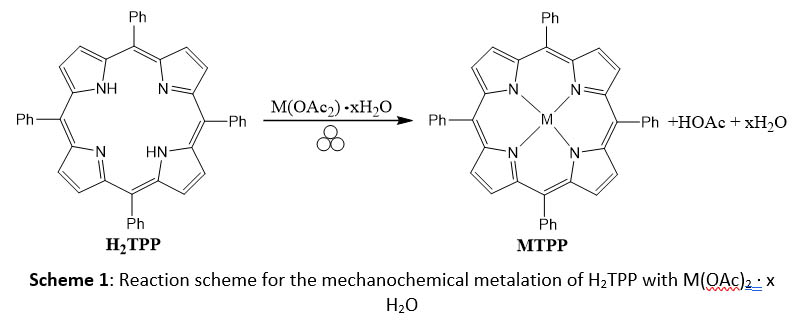
Mechanochemistry, an expanding field in chemistry, is a technique used to complete reactions without the use of a solvent, resulting in greener and more sustainable syntheses. Based off of previous work, the mechanochemical metalation of tetraphenylporphyrins will be explored with a focus on ruthenium porphyrins. Ruthenium porphyrins present the opportunity to degrade polymers so we can solve a persistent pollution problem (too many plastics) by using green chemistry synthesis methods! During your research time you will learn to use an electronic (UV-Vis) spectrometer, learn to use a mixer mill, and good laboratory techniques.
Aldol Condensation
Balazs Hargittai, Ph.D. Professor of Chemistry
More Information
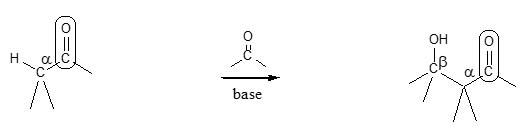
Organic compounds that contain a carbonyl group (carbon-oxygen double bond) have a hydrogen on the neighboring carbon (α-carbon) that is more acidic than most other carbon-hydrogen bonds. The conjugate base of these carbonyl compounds can react with other carbonyl compounds to form a new carbon–carbon bond. In these reactions, known as aldol condensation, the first carbonyl compound serves as the nucleophile, while the second carbonyl compound serves as the electrophile. A new carbon-carbon bond is formed between the α-carbon of the nucleophile and the carbonyl group of the electrophile. The product of the reaction is a b-hydroxy carbonyl compound, which often undergoes a further dehydration (loss of water) reaction.
Aldol condensation. The a-carbon of the nucleophile (shown as the starting material) forms a bond with the carbonyl carbon of the electrophile (shown as reagent above the arrow) to form a b-hydroxy carbonyl product.
In the Chemistry Department at Saint Francis University, our objective is to teach critical thinking skills to our students. A new laboratory experiment that we are planning to introduce involves running the aldol condensation reaction and then identifying the resulting product using nuclear magnetic resonance spectroscopy (NMR). Students will receive two unknown carbonyl compounds (from a predetermined list) to run the reaction and will have to identify which two compounds were used in their experiment by using NMR for characterization.
High school students participating in this project will test various combinations of carbonyl compounds and characterize the products. The project will give participants the opportunity to learn about organic chemistry, run organic reactions, and learn the use of a popular structure determining technique, NMR.
The Effects of Training, Enrichment, and Socialization on the Wellbeing of Shelter Cats
Shlomit Flaisher-Grinberg, Ph.D. Professor of Psychology
More Information
Cats living in shelters suffer from stress and lack of proper socialization. Shelter cat welfare can be improved using training methodologies, environmental enrichment, and human interaction. The project aims to assess different stressors at the shelter environment, compare the effects of different training and enrichment methods on shelter cats’ stress, behavior and related physiological measurements, and design procedures that will lead to the reduction of cats’ stress and facilitation of their adoption outcomes. The project will take place at SFU and include direct interactions with shelter cats.
Kindergarten and First Grade Teachers’ Perceptions of Handwriting and Fine Motor Skills in their Students
Julie Nagle, Ph.D. Clinical Associate Professor of Occupational Therapy
More Information
The purpose of this study is to:
Describe how teachers view their students’ handwriting and fine motor abilities.
Document how much time is spent on handwriting and what kinds of activities are used.
Identify perceived barriers and supports for addressing these skills in the classroom.
The study will be exploratory in nature and would consist of developing a survey that would collect both quantitative and qualitative data. The survey would gather the perceptions (quantitative and qualitative data) from kindergarten and first grade teachers revolving around their students’ handwriting and fine motor abilities. The survey will be electronic and will use Microsoft forms to collect the data; recruitment of research subjects would be done via social media/snowball sampling.
High school students participating in this research study will have the opportunity to learn about all aspects of this study, including, but not limited to the field of occupational therapy, foundational developmental skills and how a child’s “occupation” as a student can be negatively impacted by several factors (technology use, changes in early education, etc.), as well as the research process in general. Research timeline:
June 2026 – meet with students to review foundations of research as well as the specific the study and submit for IRB approval (can be done via video/web conference if the student cannot make it to campus, although, in-person is preferred).*
June-July 2026 – implementation/ data collection (this involves deploying survey – no in-person/on-campus commitment during this time; group will communicate via email).
Late July or early August 2026 – data analysis and summary of findings (can be done via video/web conference if the student cannot make it to campus, although, in-person is preferred).*
November 2026 – prepare and present poster at SFU Student Research Day
* On-campus date and time for June and then late July/early August will be determined by a majority vote/mutually agreed upon date/time – I will not set any dates without conferring with the high school students
Planting and Maintaining the Therapeutic Gardens at Maple Heights Rehab Center
Timothy Bintrim, Ph.D. Professor of English
More Information
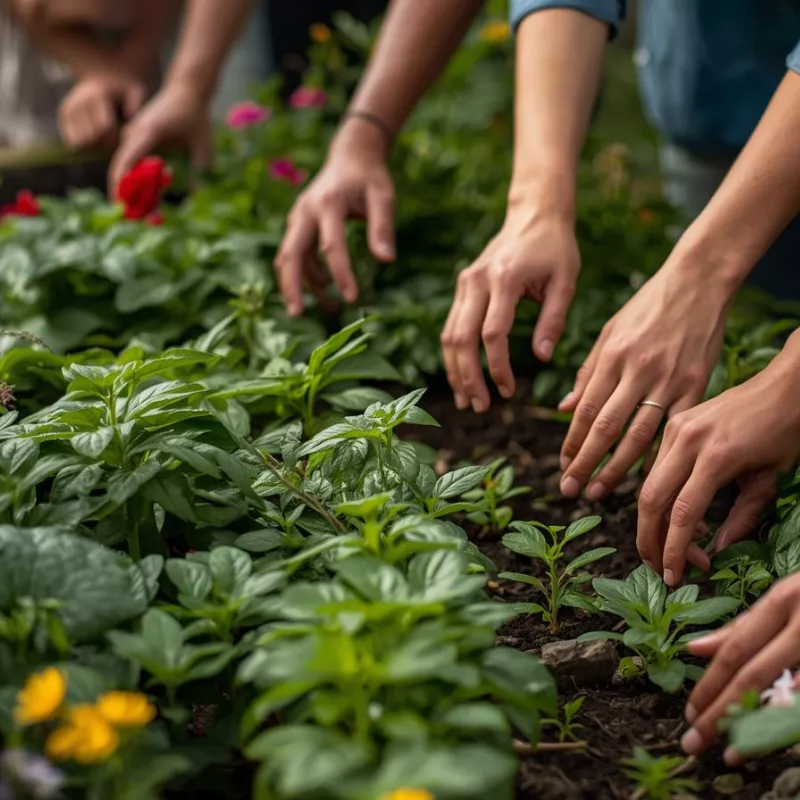
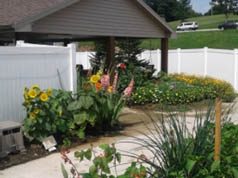
In 2019, SFU's Sustainability program established the Pavilion Garden at Maple Heights Rehab Center. Named for the Pavilion at its center, this walled sensory garden features herbs, edible flowers, and vegetables that we start from seeds or cuttings in our high-tunnel greenhouse on campus and transplant into beds and planters at an ideal height for wheelchair users. In fall 2025, we began a second garden outside the Physical Therapy department at Maple Heights. Developing the PT Garden will be the major focus of this year’s pre-college experience. You will learn practical skills in horticulture and botany and may get to meet the residents.
Research proves that when elderly people have access to gardens, the activity elevates their mood, reduces the need for medication, and encourages wellness, flexibility, and fine motor skills. This pre-college academy will be ideal for students who may want to major in occupational or physical therapy, gerontology, psychology, nursing, physician assistant science, horticulture, botany, or ecology.
The Pavilion Garden on July 4, 2022
Our Therapeutic Gardening Pre-College Research Experience will alternate between the SFU Hoophouse (a high-hoop greenhouse near Torvian Dining Hall) and the two gardens at Maple Heights Rehab Center at 429 Manor Road, Ebensburg. Our first meeting will be on June 10 from 9-12 at the Maple Heights Pavilion Garden. If you have a prior family or school event and must miss the first meeting, don’t worry — I don't take attendance and we have plenty of projects for all!
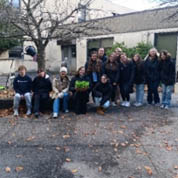
SFU sophomores at the new PT Garden, Nov. 2025
Dragonfly Diversity
Lane Loya, Ph.D. Professor of Biology
More Information
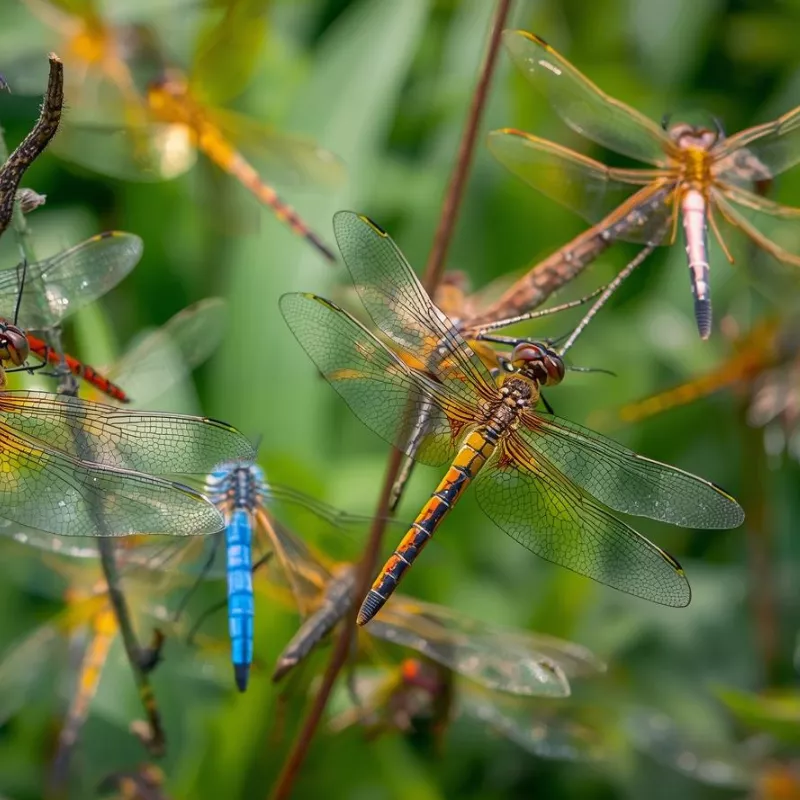
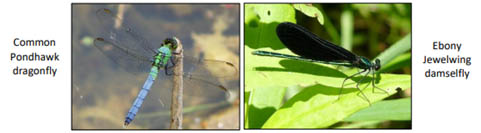
Dragonflies and damselflies are predatory insects belonging to the Order Odonata. These colorful and acrobatic insects are therefore often collectively referred to as “odonates.” Although there are about 180 different species of odonates known to inhabit Pennsylvania, little is known about the distribution of these species across the state. The community diversity of odonates has been studied heavily in some regions of the state, while other parts of Pennsylvania, such as Cambria and Blair County, have not been surveyed heavily. The goal of this project is to increase our understanding of odonate diversity by conducting field surveys of adult and larval odonates in the Laurel Highlands region.
Understanding odonate diversity is important to environmental science. Given that both adult and larval odonates are found in and near freshwater ecosystems, and are key components of food webs, there is concern about their decline due to freshwater habitat loss. For example, the IUCN (International Union for Conservation of Nature) recently documented that 16% of the world’s odonate species are at risk of extinction due to the deterioration of wetlands from agriculture and urbanization. This project will help us to document odonate diversity on a local scale and provide a baseline so that future ecological changes will be better understood.
Students working on this project will learn to capture and identify dragonflies and damselflies, in both the larval and adult stages. Field work will be conducted daily, so it is expected that participating students will be willing to work and hike outside under various weather conditions. Although field work can be very enjoyable and is generally safe, students should be willing to take necessary precautions against mild risks such as bug bites and sunburns. Transportation to field sites will be provided.
In this project, students will gain hands-on experience with field technique, gain valuable critical thinking skills, and have the opportunity to contribute to an ongoing, active research study. Students particularly interested in careers relating to biology, environmental science, zoology, entomology, or conservation science are encouraged to apply, Participants will learn more about the disciplines of biology, in general, and gain insight into possible careers related to the life sciences.
How to Register:
We accept applications from rising sophomores, juniors, and seniors in high school who are in good academic standing. Registrations are accepted until five business days prior to the start date of the chosen research program, or when all available spaces are filled.
Registration is now closed. 2027 dates to be announced.
Frequently Asked Questions
Registration usually opens in late fall. Registration closes five business days before the scheduled academy, or when all available spaces are filled, whichever comes first.
STEP 1: From this page click the academy you would like to register for (or find it at https://events.francis.edu/). Click the “Buy Tickets” button. Select the number of seats you would like to reserve. Enter a ‘promo’ code, if applicable. If paying by check, enter ‘paybycheck’ in the promo code field. Complete the required fields and click to submit payment. Once submitted, you should receive an email confirming your spot.
STEP 2: Complete the Medical and Emergency Contact Forms. All required fields must be completed and payment received before registration is considered official. Incomplete forms will result in the participant being placed on a waiting list. If you do not complete the form in a timely manner, your spot may be forfeited.
If applicable: Mail completed health forms and/or check to
Samantha Gorman, Saint Francis University Summer Academies for High School Students P.O. Box 600 Loretto, PA 15940
Please note:
There is no cart function. If you would like to register for more than one academy, you must do so for each academy separately. We apologize for any inconvenience this may cause.
The Medical and Emergency Contact Form only needs to be completed once per participant, even if participating in multiple academies.
You may create a user account with the registration system, but this is not required.
Email updates will come from SummerAcademy@francis.edu. We will send details approximately 2 weeks before camp and a reminder approximately 1 week before camp. You may receive additional automated notifications from the online event registration system.
Credit Card: Please note, there is a processing fee for this credit card service.
Check: If you wish to pay by check you must enter the PROMO CODE: paybycheck at checkout.
Please make checks payable to Saint Francis University. If you have a PROMO CODE, please deduct its value from the payment. Please mail a printout of your registration confirmation and check to:
Leona Horner, Saint Francis University
Summer Academies for High School Students
P.O. Box 600
Loretto, PA 15940
Yes. Students are accepted into the Summer Academies based upon the submission of their academy materials and the maximum number of participants has been reached. As seats in programs become available, we will work through the waitlist to fill the cohort. If a seat in the students’ first choice program is not available, a seat will be offered in an alternate program.
All completed forms and payment of balance due, MUST be received by Friday, June 12, 2026.
No. Students will be provided with required course materials and a laptop, if necessary, to use during their participation in the program.
Jeans, shorts, and t-shirts can be worn for most of the program instruction and activities. Academies with lab components may require long pants, shirts with sleeves, and closed toed shoes. Additional details on attire will be provided in the academy description.
Summer Academy students may want to bring some spending money with them. The campus bookstore will be open and there are snack and soda machines around campus that students may want to purchase from. Additionally, the group may take a recreational field trip to a local park or sporting event.
Summer Academy students may want to bring snacks, though breakfast, lunch and dinner are provided.
Saint Francis University is committed to providing a safe, respectful, and engaging environment for all participants. Students are expected to:
Show respect for peers, mentors, faculty, staff, and campus property at all times.
Participate fully in all scheduled sessions and activities.
Follow all safety guidelines and instructions from staff and mentors.
Use technology responsibly and only when permitted.
Abide by residence hall rules, including quiet hours and room check-in/check-out times.
Refrain from any behavior that disrupts learning or threatens the safety or well-being of others.
Violations of this policy may result in dismissal from the academy without refund, and parents/guardians will be notified. By registering, students and families agree to these expectations.
Registration may be cancelled up to two weeks (14 calendar days) prior to the start day of the selected academy for a full refund. Cancellations closer than 14 calendar days to the start of the academy may be granted in some circumstances for medical or emergency reasons only, unless the spot can be filled from the wait list. Please contact staff to discuss your situation.
There is no credit or refund for missed days or partial days.
If you know that your student will be unable to attend an academy, please let us know as soon as possible, so that we can offer the opportunity to another student who may be on the waitlist.
We reserve the right to cancel an academy due to insufficient registrations. If an academy is canceled, you will receive notification no less than 10 business days before the start of the academy. A new academy will be selected, or a full refund will be issued.
In the event of extenuating circumstances, the academy schedule may be adjusted or canceled. Any changes to the academy schedule will be communicated with parents/guardians in as timely a manner as possible.